Cadeau de Lumière – Louisiana Weekends | Episode 20 – When life forces a change, embrace it.
After years of graduate school, a Ph.D., and a few published articles, I expected fiction to be easier than it was. Not because I thought I was a good writer. Because academic writing had already taught me how to work. You design the study. You run the work. You strip the page down to what the data will support. Descriptors come out. Mood comes out. Just the facts.
That training is useful until you sit down to write a novel. My professional life is tilting from academic work toward administration. That is fine. It also leaves a hole. I liked the projects. I liked writing the results. One of the better summers I have had was being asked to write a chapter for a professional book on learning. Those invitations will be fewer. Photography, home research, and this blog became the outlets. Fiction was the one I had never taken seriously.
It was not a lack of imagination. We all make stories. Mine just tend toward the obscure and the ordinary. What I want to write about, a majority of readers may find slow. Academic training pushes that further. Distill. Remove flavor that distracts from the thesis. When I sat down to start The Ophiuchus Signal, I could write the essentials of the story and almost none of the flavor. The first draft read like a paper.
I like work that lets the mundane sit next to the large event. Terry Mancour does that in the Spellmonger books: feudal life is not only banners and magic, it is also the ordinary problem of living. Some readers will call that padding. I think it is layer. I wanted that kind of room in my own pages and did not know how to put it there.
The story itself had been riding with me for about a number of years. My commute is forty minutes in the morning and an hour and twenty in the afternoon. That time usually goes to audiobooks and to thinking. Characters and events arrived in pieces, I ride with my same recorder that I used in graduate school to capture thoughts. I kept wondering whether they would ever get onto paper. The change in my job made the question practical. If the academic writing was going to disappear due to circumstance, then I needed another place to put the same habit of attention.
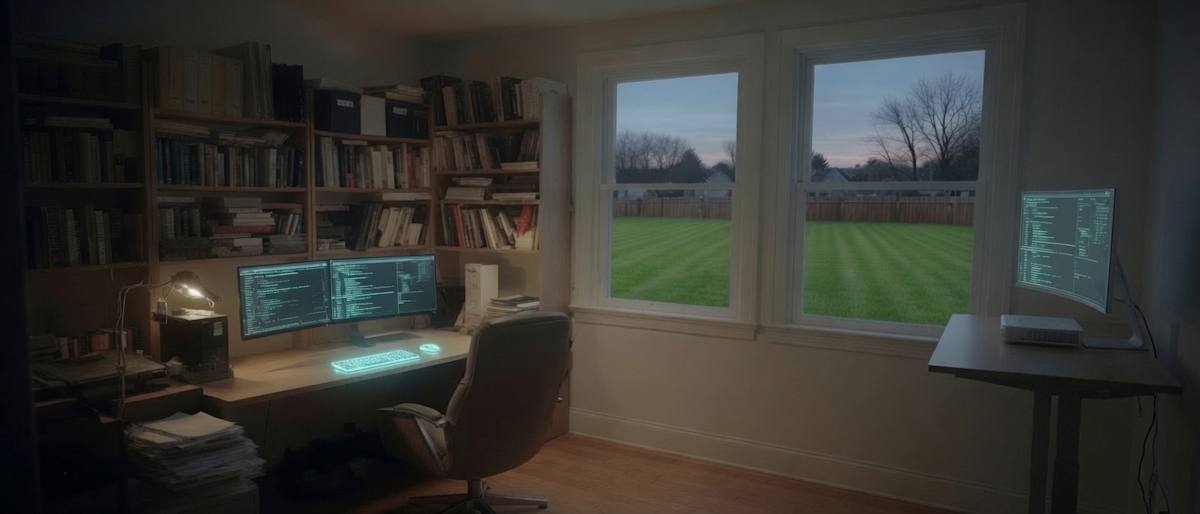
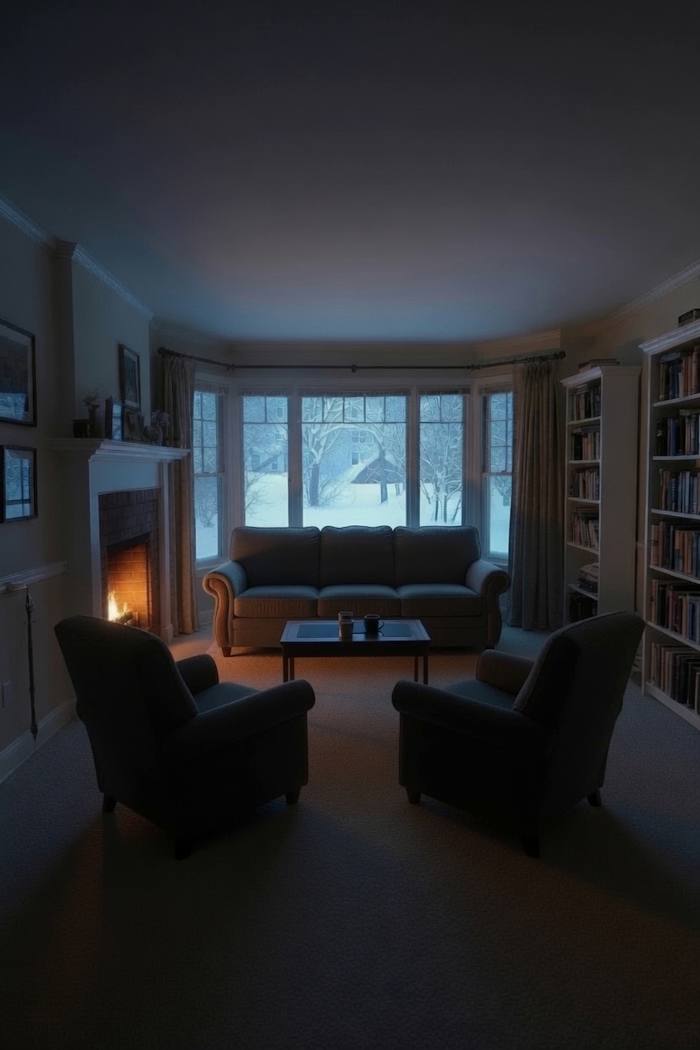
My problem was not writing, it was unlearning habits that have been trained into my prose over the past 20 years of professional life. The problem was description. I could see the rooms. I could not get them onto the page. The method that finally worked was backwards from how I had been trained. I wrote what I saw in my head the way I would have written a methods section: bare, complete, no atmosphere. I gave that paragraph to Grok’s image tools and asked for a still. I revised the prompt until the picture matched the room I had been carrying. Then I wrote from the picture, not from the idea of a room. A chair. A fire. Two cups. I did not use every detail in the prose. I used enough to stop explaining the house and start putting a person in it.
That is how I am untraining all those years of abstraction. I also do not think of myself as a strong first-draft writer. I think I am a decent rewriter. Next I had to leverage the academic process for the components of the story. Instead of trying to put in all layers at once, I decided to break the layers down into sections and run through each novel to input those layers. I thought of it as making a gumbo on the page.
Dialogue is the roux. It is the base of what happens. Rooms and locations are the holy trinity. What I call emotive, the human weight in the scene, are the protein. With out it you have plain broth. The events and actions are the spice. For each step, I had to just, get it into the pot.
I do not stop for spelling or grammer. I do not stop if what I am writing does not fit the time an location. I write. I write what comes to mind for each layer. Do not garnish while it is still raw. Then let it simmer. Stir when it needs stirring. Time, care, and process do the rest.
Children of Ophiuchus trilogy came out of that pot. Not from a sudden gift for fiction. From a commute, a job that was changing shape, and a decision to put back the things graduate school had taught me to take out.